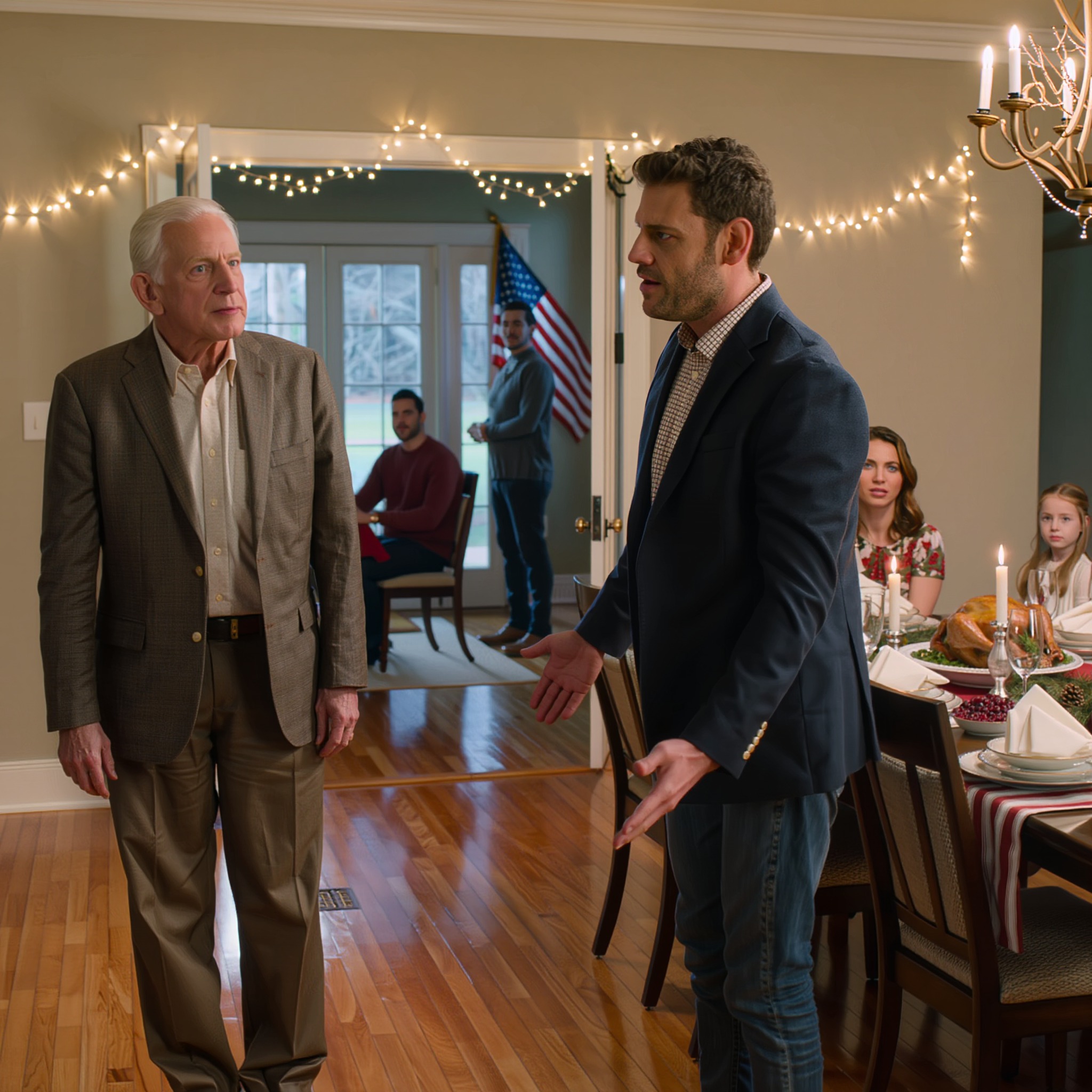
The weeks until the hearing crawled by with the same cold determination as January itself. I maintain my routine. Chess with Harold. Walks through Land Park, preparing for whatever came next. Amanda called once more. I let it go to voicemail. Dad, please drop this. We can work this out. Please. Her voice was broken, exhausted. I listened once, deleted it, felt nothing.
February 12th arrived gray and cold. Sacramento County Superior Court, 729th Street, an imposing building downtown. Robert and I arrived at 8:45 for the 9:00 hearing. Security screening, metal detectors, elevator to the fourth floor, Department 42. The courtroom smelled of wood polish and old law books. California state seal above the bench. Judge Williams’s name plate gleaming brass. Michael and Amanda were already there with Linda Fitzgerald. First time I’d seen them since Christmas night. Michael wore a cheap suit, ill-fitting, probably borrowed. He hadn’t shaved well. Dark circles shadowed his eyes. Amanda wore business casual from Target or Walmart. Her hair less styled than I remembered, makeup minimal. Jenny sat between them looking miserable. Linda Fitzgerald carried an overstuffed briefcase, papers threatening to spill out. She looked harried and unprepared. Michael saw me, his face flushed immediately, pale to pink to red to nearly purple, like watching a sunset reflected in anger. Amanda looked away, wouldn’t meet my eyes. Jenny gave a small sad wave. I nodded back. All rise. Department 42 now in session. Honorable Harriet Williams presiding. Judge Williams was an African-American woman in her 60s, gray hair and a professional bun, reading glasses on a chain. Her expression suggested she’d seen every type of foolishness courts could offer. She took the bench, reviewed the file briefly. I’ve reviewed the complaint in response. Let’s get straight to it. Miss Fitzgerald, your clients are claiming what exactly? Linda stood fumbling with papers. Your honor, my clients resided at the defendant’s property for 36 months. They established adverse possession through continuous occupancy. Adverse possession requires 5 years minimum in California. Your clients lived there 3 years. Explain the discrepancy. Well, your honor, there’s also constructive ownership through improvements made to the property. What improvements? Documented how. My clients will testify to household repairs and general upkeep. Judge Williams cut her off. Testimony alone doesn’t establish ownership, Miss Fitzgerald. Do you have receipts, contractor invoices, bank statements showing these improvements? Testimonial evidence should be sufficient to establish not in my courtroom. Next argument. Robert Morrison stood calm and prepared. Your honor, I have comprehensive documentation, bank statements showing Mr. Ross paid every household expense for 36 months. He slid exhibits across to the clerk. Additionally, email evidence from November 2023 where plaintiff Amanda Ross Sterling explicitly acknowledged this as dad’s house. Her words. He connected his laptop to the courtroom projector. Amanda’s email appeared on screen, visible to everyone. Thanks for letting us stay in your house, Dad. Michael’s purple face deepened like an overcooked beet, I thought. Judge Williams reviewed the document silently for two full minutes. Then she removed her reading glasses. I’ve seen enough. Ms. Fitzgerald. Your clients have no case. Adverse possession requires 5 years. No lease existed. No rent was paid. No ownership was established. This is clearly a family dispute, not a property claim. Motion to dismiss granted. Case dismissed with prejudice. Linda tried once more. Your honor, if we could have an extension to gather additional No, with prejudice means final, Miss Fitzgerald. Michael half rose from his seat. This is— Judge Williams’s voice sharpened like a blade. Sit down, Mr. Sterling. You’re fortunate I’m not sanctioning your attorney for wasting court time. All rise. The judge exited.
The hearing had lasted less than 15 minutes. In the marble corridor outside, Michael was shaking with rage. He turned toward me, started forward. Robert stepped between us. Don’t. You’re already on thin ice, Mr. Sterling. You’ll regret this, old man. This isn’t over. Several people in the corridor turned to look. Amanda pulled Michael’s arm. Michael, stop. Let’s just go, please. Linda Fitzgerald scurried away without speaking to her clients, knowing she’d failed them completely. I stood calm, watching Michael’s meltdown with the detachment of someone observing a chemical reaction, predictable, inevitable, complete. I watched my son-in-law disintegrate in a courthouse hallway, purple-faced and impotent, and felt something I hadn’t expected. Not triumph, not even satisfaction, just cold certainty that this was far from over. My hand slipped into my coat pocket, fingers touching the folder Robert had given me earlier. The one marked phase two, civil recovery complaint, $78,000.
The counterpunch was ready.
The weeks following the courthouse dismissal passed with deceptive calm. Michael and Amanda vanished from my radar, licking their wounds in Del Paso Heights. But I wasn’t idle. Victory in court was one thing. Justice was another, and justice required deeper digging.
In early March, I made a phone call I’d been planning since Christmas night. I’d spent 35 years in insurance. I knew how fraud worked, and I knew Michael. Court victory stopped their claim, but didn’t recover my losses. Michael was judgment proof. No assets, no income, already drowning in debt. A civil suit might win me a judgment I’d never collect. But if I couldn’t get money back, I could ensure consequences found him. I called Thomas Richardson, former colleague from the insurance industry. He worked for California Department of Insurance fraud investigation division. We hadn’t spoken in 18 months, but maintained cordial professional ties. Thomas, it’s Waldo Ross. How’s retirement treating you? Still a year away, Waldo. Counting down. Let me buy you lunch then before you escape. The firehouse work for you? Haven’t been there in months. Tuesday. Perfect. Noon. Tuesday arrived cold and clear. The firehouse sat at 1142nd Street, downtown Sacramento, upscale enough for professional lunches. I arrived first. Always did control tactic and secured a quiet corner table. Thomas arrived at noon, sharp, 58, gray hair, bureaucrats, careful manner. We covered weather, mutual acquaintances, his approaching retirement. I waited until after entre arrived to mention Sterling Construction. Cut my steak, took a bite, chewed, swallowed, then reached for my water glass. Remember that construction company that went under a few years back? Sterling Construction? Thomas paused midbite, thinking, Sterling? Yeah, that rings a bell. We had some complaints on them. Complaints? What kind? Insurance fraud allegations, inflated damage claims. We started investigating, but the company went bankrupt before we could build a case. So, the investigation just stopped. Usually does when there’s no business entity. We moved to active cases. The seed was planted. Investigation abandoned, not resolved.
After lunch, I returned home and began researching Sacramento County business records, bankruptcy filings, all public information. found Kevin Torres listed as 25% partner in Sterling Construction LLC. Further digging, Kevin now worked as foreman at Davidson Brothers Construction. I called Davidson Brothers, said I was an old friend of the family. Got Kevin’s cell number from a helpful receptionist.
That evening, I made the call. Kevin Torres, my name is Waldo Ross. I’m Michael Sterling’s former father-in-law. His response was immediate, bitter. Former? Good for you. That guy’s a snake. The venom in his voice was promising. That’s becoming clear. I paid $45,000 to save Sterling Construction. Learning it wasn’t worth saving. 45 grand? Man, you got played. That company was rotten from the start. Kevin’s story poured out. Sterling Construction had done commercial renovations. 2019 project warehouse renovation. During construction, section of roof accidentally damaged. Michael filed insurance claim for 120,000. Repairs and business interruption. Insurance paid out. Actual repair cost 40,000. Michael pocketed the $80,000 difference. I confronted him. He said it was creative accounting. I said it was fraud. What did you call it after he forced you out? Theft. But my lawyer said proving it would cost more than I’d win. I kept the documents anyway out of spite. Do you still have them? original invoices, claim forms, every single page. What if those documents reach the Department of Insurance? Pause. Then would they actually investigate with solid evidence and credible witness? Yes. Where do I send them? I’d love to nail that bastard. I gave him Robert Morrison’s office address.
A week later, Robert called. Got a package from Kevin Torres. Insurance claim forms, repair invoices, email chain. This is damning Waldo. Clear insurance fraud. $80,000 discrepancy. Can you forward it to the department anonymously? I can file as concerned party. Won’t include names unless they need witness testimony. Do it. This could mean criminal charges. Good. While researching Michael’s business records, I’d notice something else. IRS filed a lien against Michael Sterling personally. 23,000 in unpaid payroll taxes from 2021. Lien still active. Debt unpaid. I called Robert. Did you know Michael owes the IRS 23,000? No, but that’s public record. Why? Because the IRS doesn’t forget and they’re harder to run from than family.
2 weeks after Robert submitted the complaint, confirmation arrived. California Department of Insurance opened formal investigation. Case Demer 2025 SACE1 1847. Michael would be contacted for interview if evidence held. Potential criminal referral to Sacramento County District Attorney. I received this news while playing chess with Harold on my back porch. March sunshine weak but warming. Harold moved his knight. You’re enjoying this. Watching him squirm. I’m ensuring justice is served. There’s a difference. Is there? Seems like revenge to me. I studied the board, selected my bishop, moved it diagonally across in one smooth motion, lifted Harold’s queen, set it aside among captured pieces. Call it what you want. By the time he realizes what’s happening, it’ll be too late. Harold stared at the board. I didn’t see that move coming. That’s the point of a long game, Harold. My hand rested on the captured queen, smooth wood warm from afternoon sun. Government machinery engaged now, wheels turning beyond my control. I imagined Michael receiving that letter from the Department of Insurance, the panic blooming in his chest as his past caught up to his present. The queen sat silent in my palm, power taken, game progressing exactly as planned.
April arrived with the kind of rain Northern California does best. Relentless, gray, miserable, perfect weather for miserable news. The investigation into Michael’s insurance fraud moved with bureaucratic slowness, but its effects rippled faster than I’d anticipated. I learned about the collapse secondhand, the way you always learn the best gossip through people who can’t wait to tell you. First call came from an acquaintance in the construction industry. Waldo thought you’d want to know. Words out about Sterling. Department of Insurance investigation for insurance fraud. I hadn’t heard. When did this become public? Last week. Sacramento construction community is small. Guy I know was giving Sterling cash work. Fired him immediately. Liability concern. Nobody wants an active fraud investigation on their site. Too much risk. Michael’s under the table income vanished overnight. Harold mentioned seeing Amanda at her mailbox looking distressed. Later that week, through Harold’s neighborhood connections, I learned about the IRS letter. Official demand 23,000 in unpaid payroll taxes plus penalties totaling 4,800. 27,800 total. Payment deadline 30 days or wage garnishment and asset seizure. They had nothing to seize. No wages to garnish. But the IRS didn’t care. Debt remained. Interest accrued.
Early May, my phone rang. Jenny’s name on screen. First time since the eviction. Grandpa, can we meet? I need to talk to someone normal. Of course, sweetheart. Where and when? Gunthers. Tomorrow afternoon. I just I can’t be in that apartment anymore. I’ll be there 2:00. Thank you. And Grandpa, I’m sorry for everything.
We met at Gunther’s Ice Cream in Land Park. Outdoor tables. Spring trying to break through April’s gloom. Jenny sat across from me with an untouched cone melting in her hand. I reached across, gently took it, set it aside, then took her hand. They fight every night about money, about the investigation, about you, about me. Dad blames you for everything. Says you’re rich and stingy. Mom finally yelled back that you gave us $45,000. Jenny’s voice shook. Some government letter came. Mom read it and started screaming. I’d never heard her like that. What did she say? She screamed, “You stole $80,000. You committed fraud.” Dad said, “I did what I had to do.” Mom said, “You destroyed us. My father threw us out because of your crimes.” Dad said, “Your father could have helped us instead of keeping score.” Mom said, “He gave us everything and you threw it in his face.” “First time Amanda assigned blame correctly, not to me, but to Michael.” Jenny continued, “Creditors call constantly, sometimes 10 times a day. Six different credit cards, all maxed, $35,000 total. They scream at each other until neighbors pound on the walls.”
Through Jenny’s account, I assembled the picture. Amanda genuinely hadn’t known about Michael’s fraud. Her confrontation with him was real. Shock, betrayal, rage. But Michael deflected. Still blamed me for not giving them more. the irony. He was right about my wealth, wrong about everything else.
The Land Park community learned the full story through social media. Helen Martinez, neighborhood association president, posted on Facebook without naming names. Some people don’t value kindness until it’s gone. Seeing someone treat their elderly parent like a servant, then act shocked when there are consequences. That’s not misfortune. That’s karma. 140 likes, 50 comments. Several tagged it in ways that identified Amanda. She was still in the Land Park Facebook group. She saw it. Public shame in the community where she grew up. Jenny reported Amanda crying in the bathroom frequently, avoiding grocery stores where neighbors shopped, unfriending people on social media. Her support system, father, old friends, gone, isolated, ashamed, trapped with a man she now resented.
Early June, text from Jenny. They’re getting divorced. Mom filed papers today. I don’t know what happens to me. I’m scared. I called Robert Morrison. My daughter is divorcing Michael. Does that affect our strategy? You’re going to sue her, too? Your own daughter? I’m going to recover what’s owed. She made her choices. Pause. All right, your call.
See more on the next page